

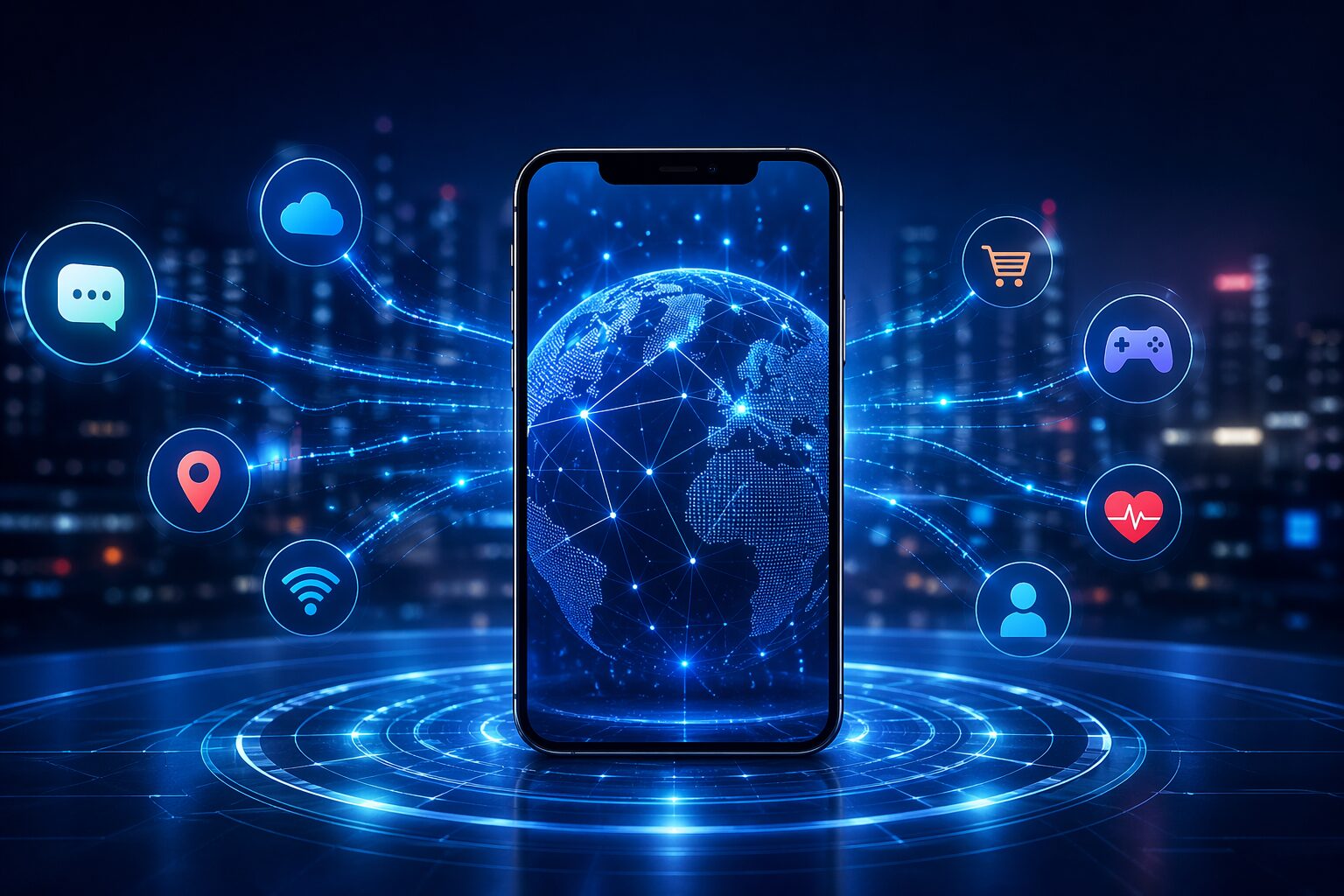
Real-Time Data in Mobile Applications: Powering Intelligent and Instant User Experiences
The evolution of mobile applications has shifted from static functionality to dynamic, data-driven experiences. Real-time data plays a crucial role in this transformation by enabling applications to respond instantly to user actions, environmental changes, and system events.
Modern mobile apps are expected to deliver seamless, personalized, and interactive experiences. Real-time data makes this possible by continuously updating content, enabling instant communication, and supporting intelligent decision-making.
This shift has positioned real-time data as a core component of next-generation mobile app development.
Applications of Real-Time Data in Mobile Ecosystems
Real-time data is widely used across various industries to enhance functionality, improve efficiency, and deliver better user experiences. Its ability to process and respond instantly makes it essential for modern mobile ecosystems.
Location-Based and Tracking Systems
Mobile applications use real-time data to provide accurate location tracking and navigation services. This includes ride-sharing platforms, delivery tracking, and logistics management systems.
Users can monitor movements, receive updates, and make decisions based on live information.
Real-time tracking improves transparency, efficiency, and user trust.
Communication and Collaboration Platforms
Messaging and collaboration apps rely on real-time data to enable instant communication between users. Features such as live chat, video conferencing, and push notifications depend on continuous data exchange.
These platforms enhance connectivity and support both personal and professional interactions.
Financial and Digital Payment Systems
Financial applications utilize real-time data to process transactions, update balances, and provide live market insights.
Users can perform secure transactions and access up-to-date financial information instantly.
Real-time capabilities are essential for ensuring accuracy, reliability, and trust in financial systems.
Interactive Gaming Environments
Gaming applications leverage real-time data to enable multiplayer interactions, live updates, and dynamic gameplay.
Players can interact with others instantly, creating immersive and engaging experiences.
Real-time synchronization ensures smooth gameplay and reduces latency.
Healthcare and Monitoring Solutions
Healthcare applications use real-time data to monitor patient health, track vital signs, and provide immediate alerts.
Wearable devices and sensors continuously transmit data to mobile apps, enabling proactive healthcare management.
This improves patient outcomes and supports timely medical interventions.
Retail and Commerce Applications
E-commerce platforms use real-time data to update inventory, pricing, and recommendations dynamically.
Users receive instant updates on product availability, offers, and order status.
Real-time insights help businesses improve customer experience and operational efficiency.
Data as the Core of Real-Time Mobile Applications
Data serves as the central foundation of real-time mobile applications, enabling them to function as intelligent, adaptive, and highly responsive systems. In modern app ecosystems, data is not just a supporting element—it is the engine that drives every interaction, decision, and experience.
Real-time data empowers applications to capture user behavior, process information instantly, and respond with precision. This continuous flow of data allows mobile apps to deliver dynamic experiences that evolve based on user actions, environmental context, and system performance.
By leveraging data effectively, applications can move beyond static functionality and become proactive systems that anticipate user needs, optimize performance, and deliver personalized value.
User Behavior Analysis
Real-time data enables detailed analysis of user behavior, including clicks, navigation paths, session duration, interaction patterns, and engagement levels.
This information provides deep insights into how users interact with the application and what drives their decisions.
By understanding these patterns, developers can identify friction points, optimize user flows, and enhance overall usability.
Behavioral insights also support segmentation, allowing applications to categorize users based on preferences and actions for more targeted experiences.
Dynamic Personalization
Personalization is one of the most powerful applications of real-time data. By analyzing user behavior and preferences, applications can deliver tailored content, recommendations, and features.
Real-time updates ensure that personalization remains relevant and context-aware.
This includes personalized notifications, product suggestions, and adaptive interfaces that change based on user interactions.
Dynamic personalization enhances user engagement, increases satisfaction, and improves retention rates.
Application Performance Insights
Real-time data provides continuous visibility into application performance, including load times, error rates, user interactions, and system responsiveness.
This allows developers to detect issues immediately and implement corrective actions before they impact users.
Performance monitoring ensures that applications remain stable, efficient, and scalable under varying conditions.
It also supports proactive maintenance and optimization.
Predictive Intelligence
Predictive intelligence uses real-time and historical data to forecast user behavior and future trends. Advanced analytics and machine learning models analyze patterns to anticipate user needs.
This enables applications to deliver proactive recommendations, automate processes, and enhance decision-making.
Predictive capabilities improve efficiency and create a more intuitive user experience.
Decision Intelligence Systems
Real-time data enables applications to make intelligent decisions automatically through decision intelligence systems.
These systems analyze incoming data and determine the best course of action, such as adjusting content, recommending products, or optimizing workflows.
Automation ensures faster responses and reduces reliance on manual intervention.
This enhances operational efficiency and improves user satisfaction.
Continuous Learning and Optimization
Real-time applications operate on continuous learning cycles where data from user interactions and system performance is used to refine strategies and improve outcomes.
This feedback loop allows applications to evolve over time, adapting to changing user needs and market conditions.
Continuous optimization ensures that applications remain competitive and effective.
Data Integration and Unified View
Integrating data from multiple sources such as mobile apps, web platforms, and third-party systems provides a unified view of user behavior.
This holistic perspective enables better decision-making and more effective personalization.
A unified data approach ensures consistency across all touchpoints.
Data Security and Governance
Handling real-time data requires strong security measures and governance frameworks. Encryption, authentication, and access controls protect user data and ensure compliance with regulations.
Responsible data management builds trust and ensures long-term sustainability.
Advantages of Real-Time Data in Mobile Applications
Real-time data has become a cornerstone of modern mobile applications, enabling them to deliver dynamic, responsive, and intelligent experiences. By processing and acting on data instantly, applications can adapt to user behavior, improve performance, and drive better business outcomes.
The integration of real-time data transforms mobile apps into proactive systems that continuously evolve and optimize themselves based on user interactions and environmental changes.
- Instant ResponsivenessReal-time data enables applications to react immediately to user actions, ensuring seamless and intuitive interactions. This reduces delays, enhances usability, and creates a smoother user experience.
Instant responsiveness is critical for applications where timing and accuracy are essential, such as navigation, communication, and financial transactions.
- Improved EngagementDynamic and interactive features powered by real-time data keep users actively engaged. Personalized updates, live notifications, and adaptive content create a more immersive experience.
Engagement is further enhanced through real-time feedback and interactive elements that encourage user participation.
- Better Decision-MakingAccess to accurate and timely insights enables both users and systems to make informed decisions. Real-time analytics provide visibility into trends, behaviors, and performance metrics.
This supports faster and more effective decision-making at both operational and strategic levels.
- Enhanced PerformanceContinuous monitoring and real-time optimization ensure that applications maintain high performance. Issues can be identified and resolved quickly, minimizing downtime and disruptions.
This leads to improved reliability, scalability, and overall efficiency.
- Increased RetentionDelivering relevant and personalized experiences encourages users to return and engage with the application regularly. Real-time updates ensure that content remains fresh and meaningful.
Higher retention rates contribute to long-term growth and customer loyalty.
- Operational EfficiencyAutomation and data-driven processes reduce manual effort and improve operational efficiency. Real-time systems streamline workflows and enable faster execution of tasks.
This allows businesses to allocate resources more effectively and focus on strategic initiatives.
- Competitive AdvantageOrganizations that leverage real-time data can innovate faster and deliver superior user experiences. This provides a competitive edge in rapidly evolving markets.
Real-time capabilities enable businesses to respond quickly to changes and stay ahead of competitors.
Challenges in Implementing Real-Time Data
While real-time data offers significant advantages, implementing it effectively requires overcoming several technical and operational challenges. These challenges must be addressed to ensure reliability, scalability, and performance.
Managing Large Data Volumes
Real-time applications generate massive amounts of data continuously. Managing this data requires advanced storage solutions, efficient processing systems, and robust analytics frameworks.
Without proper management, data overload can lead to inefficiencies and inaccurate insights.
Ensuring Low Latency
Low latency is critical for real-time applications, as delays can negatively impact user experience. Achieving minimal latency requires optimized infrastructure, efficient data pipelines, and high-performance networks.
Balancing speed and accuracy is essential for maintaining reliability.
System Integration Complexity
Real-time systems often involve multiple platforms, tools, and data sources. Integrating these components seamlessly can be complex and resource-intensive.
Effective integration requires well-designed architectures and standardized communication protocols.
Data Security and Privacy
Handling real-time data involves managing sensitive user information. Ensuring data security and compliance with regulations is critical to maintaining trust and credibility.
Encryption, authentication, and access control mechanisms are essential for protecting data.
Scalability and Infrastructure
Applications must be able to scale efficiently to handle increasing data volumes and user demand. This requires flexible and scalable infrastructure that can adapt to changing requirements.
Cloud-based solutions and distributed systems are often used to address scalability challenges.
Skill and Resource Requirements
Implementing real-time data systems requires specialized skills in data engineering, analytics, and system architecture. Limited expertise can impact implementation and performance.
Investing in skilled resources and training is essential for success.
Addressing these challenges requires a combination of advanced technology, strategic planning, and continuous optimization.
Future of Real-Time Data in Mobile Applications
The future of mobile applications is increasingly shaped by real-time data and intelligent technologies. As user expectations continue to rise, applications must deliver faster, smarter, and more personalized experiences.
Emerging technologies such as artificial intelligence, machine learning, and edge computing are enhancing the capabilities of real-time systems.
Edge Computing
Edge computing processes data closer to the user, reducing latency and improving performance. This enables faster responses and more efficient data handling.
Artificial Intelligence and Machine Learning
AI and machine learning enhance predictive capabilities, enabling applications to anticipate user needs and deliver proactive solutions.
These technologies also support automation and intelligent decision-making.
Hyper-Personalization
Future applications will deliver highly personalized experiences based on real-time data, context, and user behavior.
This will create more meaningful and engaging interactions.
Autonomous Systems
Real-time data will enable applications to operate as autonomous systems that adapt and optimize themselves without manual intervention.
As technology evolves, real-time data will become even more integral to mobile app development, driving innovation and transformation.
Best Practices for Real-Time Mobile App Development
Implementing best practices ensures that real-time applications are efficient, scalable, and secure.
- Design Scalable and Flexible ArchitecturesBuild systems that can handle increasing data volumes and user demand without compromising performance.
- Optimize for Low Latency and High PerformanceEnsure that data processing and communication are fast and efficient to deliver seamless user experiences.
- Leverage Cloud and Edge ComputingUse modern infrastructure to improve scalability, reliability, and speed.
- Implement Strong Data Security MeasuresProtect user data through encryption, authentication, and compliance with regulations.
- Utilize Advanced Analytics and AIEnhance decision-making and personalization through data-driven insights.
- Continuously Monitor and Optimize PerformanceUse real-time analytics to identify issues and improve application performance.
- Ensure Seamless Integration Across PlatformsCreate a unified ecosystem where data flows smoothly between systems.
- Adopt a Data-Driven Development ApproachUse insights to guide design, development, and optimization strategies.
Quote
Real-time data is the force that transforms mobile applications into intelligent ecosystems capable of delivering instant, personalized, and continuously evolving experiences

