Best Influencer Marketing Tools for Digital Marketing

Best Influencer Marketing Tools for Digital Marketing While engaging in influencer marketing on the cheap is feasible by gradually and naturally creating connections with influencers, it isn’t easy to work. The time required for you as an employee to establish the essential contacts may be rather costly. Several influencer marketing software applications simplify the process and are sure to save you money. Influencers employ various technologies based on their demands, specialization, and content marketing approach. While numerous tools, software, applications, and websites are accessible for influencers to employ, it is critical to filter your list down to the things you believe you will need regularly. It might be a content management system, a social media management system, an email marketing solution, or a picture and video editor. Marketing influencer markets are just as important as social media and web platforms. These are typical channels used to track influencers for corporations. They provide research facilities throughout their networks to assist marketers in developing partnerships with appropriate influencers. Because they are intrinsically limited to opted-in influencers, marketplaces often review applications to present you with a list only of influencers they suggest you work with. Although these software solutions were initially limited to influencer search and identification, they have expanded their offerings. Indeed, utilizing one or a mix of these tools or other forms of technologies, you can execute a nearly complete influencer campaign.
  1. Awario
Awario is one of the relatively new kids on the block. Still, it provides a robust social media monitoring tool with all of the advanced features you’d require in a tool, such as boolean search, sentiment classification, location-based tracking, social listening reports, topic cloud, and monitoring on sites other than Twitter, such as Instagram, Facebook, and YouTube.  
  1. Brand24
Brand24 is a social media management application that provides real-time social information about a user’s brand. It offers features such as “Influencer Score,” which reveals if notable media celebrities have been discussing their company. It may also do a “Sentiment Analysis” for the user, which helps them understand the types of comments made by the public (good, harmful, or neutral). Another great advantage of this product is recognizing sales opportunities and connecting with clients in real-time.  
  1. Brandwatch
Brandwatch keeps its users up to speed on the current market trends by familiarising them with all the hot issues and trends circulating in the industry. This real-time listening technology allows users to connect with consumers without delay. Its most beneficial aspect is notifying the user of potential opportunities and hazards. If a media influencer, for example, engages with the product, the marketing team is immediately notified. It is worth noting that Brandwatch’s recent acquisition of erstwhile strong competitor Crimson Hexagon significantly enhances its spot in the market for social listening tools.  
  1. Digimind
Digimind promises to be an AI-powered and hence intelligent social listening tool. Digimind appears to have a notably strong presence with worldwide agencies, having been used by several of the world’s foremost companies, such as McDonald’s, Sony, and Lexus. Digimind, a worldwide corporation with operations in four countries, provides the capabilities you’d expect from a sophisticated social listening solution, such as cutting-edge sourcing, text analytics, advanced tracking, and real-time analysis.  
  1. Social Blade
Because it offers everything media and marketing to all companies, SocialBlade is our top selection in our list of the best 30 Influencer Marketing Tools. Whether it’s Instagram, Snapchat, Facebook, or LinkedIn, SocialBlade is a platform that gives extensive worldwide research depending on your brand’s needs. They even show you how to increase the reach of your videos, locate influencers for collaboration, and use their premium Business API to allow direct connection with your accounts.  
  1. HypeAuditor
HypeAuditor is a follower-verification technology that uncovers fraudulent followers who have been paid or bought to engage in marketing and engagement initiatives. The technology detects these imposters and assists firms in optimizing their social media presence.  
  1. Heepsy
Heepsy is an excellent tool for marketers to use as a search engine to locate influencers depending on their particular searches and criteria. It links its customers to a network of over 11000 influencers from across the world. Heepsy gives a complete overview of the influencer’s reach through statistics and infographics. This technology enables companies, enterprises, and influencers to work together to sell items or generate brand endorsements.  
  1. Captiv8
Captiv8 is among the world’s specialized applications for influencers. It is prevalent and beneficial for influencers and producers on various social media sites. It enables creators to verify themselves on their database to aid in the advertising and campaigning of their programmes. Its clever search feature allows users to look for captions, profiles, and photographs to gain vital information. It enables influencers to track critical KPIs, dialogues, and custom hashtag conversions across several platforms.  
  1. The Influencer Marketing Factory
The Influencer Marketing Factory is a worldwide influencer marketing organization that assists clients in reaching Gen Z and Millennials using TikTok, YouTube, and Instagram. Back in 2018, this agency was a pioneer in TikTok influencer marketing, collaborating with Sony Music, Universal Music, and Warner Music Group to promote the launches of their songs and performers through fun hashtag challenges. With employees in the United States and Europe, Influencer Marketing Factory today collaborates with firms such as Google, Snapchat, Amazon, Dunkin’ Donuts, BudLight, FOREO, and many others.  
  1. Vayner Media
Vayner Media is a digital agency that uses social media and influencer marketing efforts to create commercial goals. Over 200 competent writers, designers, photographers, editors, and animators use their platform to blow enterprises out of the water. They also offer data skills and innovative research to help businesses connect with potential clients.  
  1. AspireIQ
AspireIQ is an Influencer Marketing integration solution for all enterprises. It allows marketers to use their innovative filtered search network to find the top influencers that fit their company goals and influence their specialized market. It creates a perfect workflow space for influencers to stay on track with their goals and discover brand lovers among their followers. AspireIQ also permits the development of discounts, promotional offers, affiliate links, and other tools to help its influencers further perpetuate its brand offering.  
  1. Tagger
Tagger is the most well-known Influencer Marketing tool on this list, as evidenced by us and their achievements in the area. This great product is straightforward to use and provides a pleasant user experience. It boasts the most exquisite celebrity-studded brand clientele, including Ketchum, Tinder, Bose, and other significant businesses. This platform may assist brands and individual influencers in a variety of ways, including content planning, interacting with followers and influencers, engaging consumers and brand fans, and receiving reliable reports based on real-time data.  
  1. trendHero
trendHERO began as a tool for detecting false followers. Still, it has now developed into an all-in-one influencer marketing platform on Instagram, with over 80 million accounts in its influencer identification database. You can perform a simple influencer search using filters and also utilize a few additional options to make the work easier. For example, if you require a list of accounts that share the same population in two clicks, utilize the “500 Similar Accounts” function. This information relies on the account followers also follow; therefore, you may utilize the data for competition analysis. “Overlaps” is a more advanced feature. It allows you to compare influencers’ unique and shared audiences for campaigns involving several influencers.  
  1. Pixlee
Pixlee is a platform allowing modern influencers and producers to organize, control, and verify their material. Pixlee not only helps brands and influencers magnify their top-performing content but also assists them in curating material in order to obtain authentic conversions for their cooperation. It delivers a list of accurate insights and statistics to enable the tracking of crucial metrics, impressions, and conversion rates based on particular requirements. This excellent tool serves as a solution that enables companies to build a community, organize information, and communicate with their fans.  
  1. MeltWater
MeltWater is an excellent media marketing tool. It is not only influencer marketing but also the overall management of a brand’s social media presence across all platforms. Famous businesses such as Google, H&M, Ogilvy, and others have influencers on their client list that may help them with their marketing goals. Their solutions encompass social influencer marketing management, which allows organizations to construct a marketing centre to manage various influencer marketing initiatives and maximize ROI. Influencer marketing is a newer phenomenon that is popular and effective for any company looking to establish a business on social media platforms. It promotes sales, connects more people, raises exposure, and builds a fanbase for the business with the support of influencers. Influencers have a natural fan base that companies in their industry may harness to profit from their dedicated fans while also perpetuating their newest offers through notable influencers. Using the above tools, one can make the best use of their services.

Best CMS Software to Build a Website for FREE

Best CMS Software to Build a Website for FREE
Are you looking for the finest CMS software to develop your website with? A CMS, or content management system, enables you to develop a working website without coding each page. However, every CMS software has distinct advantages and disadvantages, so you should select the solution that is appropriate for your demands and budget.

What is a CMS?

A content management system (CMS) is a piece of software that manages the underlying architecture of building web pages. With a CMS, users may concentrate on the front-end aspects of website creation, such as changing the design and controlling content. A CMS also organizes everything on your site’s front end. For instance, if you write a blog article, the CMS will place it at the head of your blog page and add a date to it. A CMS, on the other hand, is more adaptable than a blogging platform. A blogging platform may be thought of as a CMS for one specific sort of material (blog posts), but a CMS can help you manage nearly any type of information.

Best CMS Software to build a website

  1. WordPress

WordPress is by far the most accepted CMS in the world, powering approximately 37% of all websites over the Internet. It started as a blogging system but has now evolved into a full-fledged CMS that can be used to create any website, from eCommerce businesses to membership sites, forums, and more. Indeed, WordPress, with the WooCommerce plugin, is currently one of the most preferred platforms for creating an eCommerce business. WordPress may be used by users of various skill levels, from those who want to establish a primary blog to those who want to build a complicated website. Sony Music, which features photographs and videos of its featured musicians, is a remarkable example of a WordPress site.  
  1. Joomla

Joomla is an open-source content management system (CMS) that runs over 2% of all websites. When contrasted to other CMS platforms, Joomla’s core software provides more excellent capability straight away, such as multilingual support. However, non-technical users may find the first setup difficult. Joomla, together with WordPress and Drupal, is the second member of the prominent open source CMS software three. Joomla, like WordPress and Drupal, includes a vast marketplace for templates and plugins to enable you to design a website that matches with your needs. Regarding technical skills required, Joomla falls between WordPress and Drupal.  
  1. Drupal

Its versatile API architecture, designed for expert web developers, enables many digital platforms. Drupal optimizes its built-in features for improved performance and security compared to Joomla and WordPress. It’s also worth mentioning that Drupal websites receive more online traffic than websites powered by alternative CMS platforms. Drupal excels at organizing vast volumes of material because of its flexible taxonomy system. It also has a user access mechanism that offers you complete control over what registered users may do within the CMS. Like WordPress, you may customize the appearance of your site with themes and enhance Drupal’s functionality using modules.  
  1. Magento

Magento is a free and open content management system (CMS) for online retailers. It is adaptable and secure but also inaccessible to non-technical users. To set it up, you’ll probably need some technical skills (or the readiness to hire someone with that expertise). You may either utilize free open source software or pay for it (Magento OpenSource). You may also pay Magento to set up and operate your shop for you (Magento Commerce), which can be expensive with monthly subscriptions beginning at $2,000+. To improve all sorts of eCommerce sites, the CMS software concentrates on security, SEO, and personalization. Because it is designed for larger online retailers, the platform is robust enough to support many items and orders.  
  1. Hubspot CMS

HubSpot CMS is a fantastic CMS for organizations and marketers that want to interact with their consumers. It’s also ideal for newbies because the platform’s user-friendly capabilities allow anyone to launch a website without technical skills. Its excellent integrated sales and marketing capabilities also aid in expanding reach and engagement. HubSpot CMS has an interface with the free HubSpot CRM. This allows you to immediately add leads to your CRM and customize your website for every visitor, which can assist you in turning them into customers. Developers may alter the site by digging into the code, while non-technical users can design pages with a drag-and-drop editor.  
  1. Kentico

Kentico is another headless CMS, this time a cloud-based content management system that uses an API. The platform can efficiently provide content across several digital channels. Furthermore, its excellent marketing tools enable it to reach a larger audience and engage visitors. Kentico’s Kontent platform includes a restricted free tier, but it might grow pricy if you need the premium services. Because Kentico Kontent is a paperless CMS, you’ll also need technical skills to build your website’s front end.  
  1. Squarespace

Squarespace is a hosted website building platform allowing non-technical individuals to create a website easily. It may also be used to build a simple eCommerce store. Squarespace isn’t as adaptable as the other tools, but that’s part of its appeal. Squarespace makes it simple for non-technical individuals to construct basic websites by simplifying things. If you’re creating something more than a simple blog, portfolio, or pamphlet website, you’ll generally want to use more versatile CMS software.  
  1. DotCMS

dotCMS is a free and open source headless CMS that prioritizes APIs. A drag-and-drop UI may be used to model many sorts of content. As an example, consider a blog article or an online product. The API will allow you to transmit your content to any location, such as a website or app. On the backend, you’ll still have access to standard authoring tools and the option to assign multiple roles and authorizations to your material.  
  1. Contentful

Although most of these various tools are designed to help you generate web pages, Contentful is designed to help you create “omnichannel digital experiences.” In a word, this implies that you can arrange all of your material in a central hub and then utilize it as needed across any digital platform. You’ll be able to search your content via a RESTful API, and Contentful caches your material on external CDNs to return API payloads in less than 100 milliseconds. Because Contentful is a headless CMS, you’ll need technical skills to set it up. It employs an Application Programming Interface (API) to exhibit content as data. As a result, non-technical users will face a severe learning curve.  
  1. Zephyr

Zephyr is a cloud-hosted CMS that caters solely to companies producing client websites. In truth, Zephyr exclusively licences itself to firms, so unless you’re prepared to collaborate with an agency partner, you can’t utilize Zephyr. Zephyr’s key sell to agencies is that, because it is cloud-hosted, it may provide a maintenance-free alternative to competing firm solutions such as WordPress or Drupal.  
  1. Canvas CMS

Canvas CMS is a cloud-based CMS featuring a drag-and-drop design system that allows non-technical people to create bespoke websites. All the designs you create with Canvas are mobile-friendly and AMP-ready, so your mobile visitors will have a terrific experience. Canvas allows experienced users to design dynamic database schema from within the CMS and contains APIs to incorporate data gathered from other sources onto your site.  
  1. Grav

Grav is a flat-file CMS that is open source. Grav’s “flat-file” label indicates that it does not require a database to function. Instead, it retrieves information from text files. Grav is highly lightweight and straightforward to install anywhere because you must upload your site’s files. However, you may still build dynamic content categories and filter content, and you will be able to generate content using a Markdown editor. Grav is appropriate for blogs and portfolios.  
  1. Sitefinity

Sitefinity is a content management system that focuses on assisting marketers in delivering optimal, tailored content. This platform’s simplicity with which businesses can connect and keep visitors. Furthermore, the platform aids in the creation of a tailored visitor journey. Insights may help you understand more about your clients and offer targeted content. Then, to optimize your content, you may rapidly set up additional A/B testing. Sitefinity may also be used as a headless CMS to distribute content to any location, while everything is hosted in the Microsoft Azure cloud for dependability and scalability.  
  1. Umbraco

Umbraco is an open-source CMS that you may host on your server. Alternatively, you may utilize Umbraco’s premium hosting service. You may add material using a basic editor as well as essential tools like a built-in form editor. You may also expand the basic CMS using Umbraco applications if necessary. Unlike other open-source platforms, Umbraco is supported by a team of specialists that offer enterprise-level assistance. Umbraco also includes a headless CMS option called Umbraco Heartcore for more technical users.  
  1. Typo3

Typo3 is ideal for enterprise-level websites because of its high scalability. It distinguishes itself by separating the online front-end from the management interface. As a result, hackers find it more difficult to disrupt the properties of websites. Typo3 is an excellent choice for enterprise-level websites. Lufthansa Group, an international air corporation, has a website with Typo3. Visitors to this bilingual website may read the most recent news and hunt for job opportunities.

Who are Influencers: Types, Examples & How Much They Make?

Who are Influencers: Types, Examples & How Much They Make?
Influencers wield enormous power. If you can convince an influencer to support your product or business, you can gain access to the influencer’s audience, which could be considerably greater than your own. Influencer marketing is the discipline of marketing wherein influencers are compensated (in cash or other forms of compensation) to advertise a company or product. Let’s look at how to construct this sort of campaign.

Who are Influencers?

Influencers are crucial because word-of-mouth recommendations and complaints travel across social media quicker than fire in a parched field. They usually have significant social media followings and work as brand advocates as well as speciality promoters. Influencers are individuals who have established a respect for their experiences and expertise in a particular area. They amass massive followings of enthusiastic, intrigued people who pay close attention to their opinions by making regular updates about that issue on their favourite social media networks. Brands value social media influencers since they may generate trends and persuade their followers to purchase the things they endorse. When you join with an influencer, you get their audience and their audience’s network. An influencer has the power to generate traffic to your site, enhance your social media visibility, and flat-out sell your product using their endorsement or narrative about their experience because of the devotion of their following.  

Types of Influencers

Different sorts of influencers can be distinguished in a variety of ways. Several of the most prevalent ways are based on the number of followers, the type of material, and the amount of impact. Influencers can also be classified as per the industry in which they work. This implies that influencers who appear to be in a low category in one metric may appear to be more influential in another. Many mega-influencers, for example, are also celebrities. However, because they lack knowledge in a specific tight area, both organisations frequently have a less natural effect on their audience. Some micro and perhaps nano-influencers can significantly affect followers in their area. They might be highly beneficial to a company providing a product for that market.  

By Follower Numbers

  • Mega Influencers

Mega influencers are people who have a big number of social media followers. Although there are no hard and fast rules defining the various types of followers, it is commonly thought that mega-influencers have more than one million followers across all social media platforms. Many mega-influencers are celebrities who came to fame offline, such as actors, athletes, musicians, or even reality tv stars. However, some mega-influencers have amassed massive followings via their online and social activities. However, only significant firms should engage mega-influencers for influencer marketing. Their solutions will be expensive, up to $1 million each post, and they’ll probably likely be picky about who they work with. Mega-influencers will almost always have staff working on their side to close any marketing arrangements.  
  • Macro Influencers

Macro-influencers are a step down from mega-influencers and may be more approachable as influencer marketers. People with 40,000 to 1 million followers on a social network are macro-influencers. There are two categories of persons in this category. B-level celebrities have yet to break through to the big time. Or they are successful online specialists with more significant followings than normal micro-influencers. The latter form of macro-influencer is expected to be more valuable for organisations engaged in influencer marketing. Macro-influencers have a prominent position and may be pretty effective in raising awareness. Given that there are more macro-influencers than mega-influencers, a company should have an easier time finding a macro-influencer ready to collaborate with them. They are more likely than micro-influencers to be acclimated to dealing with businesses, making communication easier. When working with this type of influencer, you must be cautious. This group is most likely to participate in influencer fraud; some have only gotten to where they are because they bought followers.  
  • Micro-Influencers

Micro-influencers are people who have become well-known for their expertise in a particular field. As a result, they usually have a sizable social media following among fans of that area. Of course, the relationship and contact a micro-influencer has with those who are their followers are more important than the number of followers. Micro-influencers are the future influencers. The internet has resulted in media fragmentation into several little speciality themes. Even if you’re interested in something odd, you’re sure to discover a Facebook group or Pinterest page dedicated to it. Micro-influencers develop themselves as real influencers in these tiny groups and forums.  
  • Nano Influencers

The nano-influencer is the latest sort of influencer to get attention. These individuals have a tiny number of followers, while they are usually specialists in a niche or highly specialised subject. Consider nano-influencers to be the traditional massive fish in a tiny pond. In many cases, they will have less than 1,000 followers, but they will be engaged and interested followers eager to connect with the nano-influencer and listen to their thoughts.  

By Types of Content

  • Bloggers

Bloggers and social media influencers have the utmost genuine and active interactions with their followers. Brands are starting to recognise and encourage this. Blogging has always been linked with influencer marketing. On the internet, there are several essential blogs. If a prominent blogger promotes your product favourably in a post, it may entice the blogger’s followers to try it out.
  • Youtubers

Of course, a blog isn’t the only sort of popular internet material. Video is another popular sort of material. In this situation, most video creators build a YouTube channel rather than having their own website. Brands frequently collaborate with prominent YouTube video creators.
  • Podcasts

Podcasting is a comparatively recent kind of web programming that is gaining traction. It has given birth to a number of household names.
  • Social Posts only

Bloggers, podcasters, and YouTubers hardly rely on their existing following to visit their site and hope for fresh content. They typically extensively promote new articles or videos on social media, making the majority of these bloggers and content providers micro-influencers. In reality, the great majority of influencers are now found on social media. While influencers can be found on all major social media platforms, Instagram has emerged as a standout recently, with many influencers crafting their posts around a spectacular photographs.  

By level of Influence

  • Celebrities

Celebrities were the first influencers, and they continue to play a role, albeit their relevance as influencers is fading. Celebrity endorsement spawned influencer marketing. For many years, businesses have discovered that their sales generally increase when a celebrity advertises or supports their product. Many corporations, particularly high-end products, continue to use celebrities as influencers.
  • Opinion Leaders

As industry experts and opinion leaders, journalists may also be regarded as influencers and represent a crucial role for companies. Industry leaders and thought leaders are respected for their skills, position, or expertise in their field. This regard is often garnered primarily due to the reputation of the company where they work. For example, a journalist at a prominent newspaper is probably not an expert on the issues on which he writes a news report. Still, he is admired for being a competent enough writer to work for such a prominent publication.
  • People with Average Influence

In many respects, the top influencers have developed their online image as experts in their respective fields. They are comparable to significant opinion leaders, although they generally have a more casual reputation due to internet engagement. And they have earned that reputation by the quality of their social media postings, blog entries, podcasts, and films they create and broadcast on their YouTube channels.  

How much money do influencers make?

Influencers are rewarded in a variety of ways. For some, the prestige that accompanies kudos from the businesses they work for is sufficient. Others will take goods discounts or freebies. Financial reward is standard, and it is frequently proportional to the number of followers that influencers have. Mega influencers may earn up to $1 million every post, whilst influencers with modest followings can earn roughly $10 per 1,000 followers per post. There is no fixed regulation governing how influencers make or how much they must be compensated. Therefore remuneration is somewhat ambiguous. According to research, 46 per cent of influencers who have been growing their following for at least four years make $20,000 or more, while 77 per cent of content producers rely on sponsor partnerships for most of their income. The true magic happens when you connect the correct influencer(s) with your brand. Begin your search for possibilities by assessing the goal of your campaign. A mega or macro influencer might be an excellent choice if you want to raise brand exposure. However, if you genuinely want to dial in and focus on your consumers, try using nano or micro-influencers who have significant relationships with them.  

15 FREE Influencer Marketing Tools to discover Influencers

15 FREE Influencer Marketing Tools to discover Influencers
Influencer marketing has become an essential component of digital marketing and a preferred technique for firms to uncover their products to a broader audience. Marketers work with influencers to promote content, and most intend to boost influencer expenditure. Knowing the top influencer marketing platforms is essential for social media marketers because they offer practical strategies to develop their company. Other prominent social media channels include YouTube, Twitter, and Facebook, but Instagram is the most influential and essential social media network. The photo-sharing software has a large user base and is quickly gaining popularity among casual and corporate users.

What is Influencer Marketing?

Influencer marketing is a type of marketing in which influential individuals are used to advertising a product or service. These influencers have a significant social media following and are frequently admired by their peers. By collaborating with these influencers, brands may reach a broader audience and spread visibility for their products or services.  

Best Influencer Marketing tools

 
  1. Upfluence

Upfluence is a full-fledged influencer platform with a diverse collection of features. However, the influencer searching and discovery engine is a critical platform component. It has a massive database with over 3 million influencer identities. The AI at Upfluence indexes and refreshes these profiles in real-time. The system assesses the reach and engagement of each piece of content. Clients may use as many keywords as they like to locate influencers on Upfluence. You begin to restrict the pool by digging down keywords. You may give each term a relative weight, making some more significant than others. You may also refine your search on Instagram by utilizing parameters such as geography, social platform, or amount of followers.  
  1. AspireIQ

AspireIQ is an advocacy-focused community intelligence marketing tool. It regards your community to be the most powerful influence of all. It defines your community as like-minded consumers, creators, professionals, experts, workers, and brand ambassadors that share values and enthusiasm for your brand that extend far beyond the product or service you offer. AspireIQ has compiled a database of over six million content producers to help you locate the ideal partners with whom you can cooperate. And AspireIQ evolves alongside you. With their automatic step-by-step work process that adjusts to your needs, you can expedite each phase of your campaign, from the initial connection and product delivery to content authorization and tracking. This implies you can reach out to hundreds of influencers if you want.  
  1. HypeAuditor

HypeAuditor can help you find the top Instagram influencers based on the amount of quality and engaged followers. HypeAuditor’s AI analyses extensively and evaluates bloggers based on quality followers and engagement. They collect raw data from various sources, depersonalize it, and cluster it. They only consider genuine likes and follow them. The algorithm then rates influencers and creates daily rankings of the world’s top influencers. You may choose a list of the most popular 1000 influencers from all genres or divide the listing into one of 14 categories. In turn, you may choose between influencer lists that include influencers from all countries and lists that only include influencers from one of the 17 nations.  
  1. StoryClash

You may find new Instagram influencers talking about your company with Storyclash’s free influencer search tool. It enables you to identify the proper type of social media character for your demands and reach, which is critical for reaching your target audience. Type your business name or hashtag into the search field to utilize the free influencer search tool. For the last 30 days, Storyclash will give you a small list of all the influencers who have lately discussed it. Each influencer’s amount of followers and speciality are included in the results.  
  1. Affable

Affable is an influencer business tool that automates influencer campaigns’ planning, optimization, and implementation. It employs artificial intelligence to deliver comprehensive demographic insights on an individual’s social media history across Facebook, Instagram, and TikTok, as well as their influence on your brand or product section from a single login. The Affable influencer database is more than simply a list. It’s a significant study effort that gives a wealth of information to assist you in finding the ideal individual. Using various complex filters, you may locate influencers depending on their demographics, geography, and followers.  
  1. Post for Rent

Post for Rent is also a powerful influencing tool. The organization successfully combines cold commercial efficiency and genuine influencer efforts. There is a mechanism for companies and influencers to submit ratings and act as a reference for one another. Businesses looking for influencers may see these star ratings on their results pages and can check reviews written by other brands by clicking on their profiles. Similarly, influencers view brand ratings, influencing their willingness to cooperate with the firm. Brands begin by developing a brief, which specifies the sort of campaign desired. The process’s more tiresome aspects, such as locating and monitoring influencers and their content, reading through profiles and statistics, and studying audiences, are easily handled through a simple and plain interface. Post for Rent helps you to find influencers depending on the hashtags they’ve used in previous posts. This aids in better targeting. They also provide the option to evaluate any social media account, with the first report for free. This is an excellent starting point for making educated selections in influencer marketing.  
  1. Influence.co

When compared to other influencer sites, influence.co takes a very different strategy. Although influence.co provides all of the standard influencer marketplace tools, it also functions as a social media platform. This assists companies in maintaining the kinds of genuine and long-term connections that are inherent in influencer marketing. Indeed, the social feature of influence.co supplements rather than replace discovery and activation. However, it is booming in lifting the platform to a higher level. Brands are more inclined to form ties with influencers whose postings appear in their feed. Influence.co offers two plans, free and premium. You may create your profile and join the platform’s community with a basic free account. You may do a basic search with up to 50 results and organize those results into up to three lists. You may build and publish campaigns and message up to 12 influencers each month. Of course, the Business Pro premium package includes a lot more. It provides you with numerous profiles, sophisticated searches, limitless results, unlimited lists, extended search, campaign administration, campaign reporting, team members, lead generation, and other features.  
  1. PitchBoard

PitchBoard is a marketplace for swiftly and at-scale executing campaigns. It sees no requirement for influencer finding or connection management features. Instead, its primary goal is to let advertisers reach new consumers on a massive scale. This implies it works effectively with platforms specializing in other areas. Pitchboard’s machine-learning system sifts through influencer information from numerous sources to discover people with audiences that are appropriate for campaigns. PitchBoard handles compensation effectively. Brands may issue an explicit request for numerous pieces of content, along with a fully fleshed-out remuneration structure. The PitchBoard provides real-time data and forecasts of expected engagement and cost per engagement. PitchBoard displays detailed statistics and analysis for influencers who pitch brands. This contains predicted engagement forecasts for each influencer and a cost breakdown for those engagements. They provide thorough information about their target audiences and an audience trustworthiness score.  
  1. Dovetale

Although any brand may utilize Dovetale, its primary concentration is on e-Commerce retailers. Dovetale emphasizes their connection with Shopify, emphasizing how they assist Shopify shops in recruiting, managing and building sales with customers who appreciate their products. As a result, it serves incredibly effectively small enterprises. That doesn’t mean they aren’t appropriate for larger enterprises. They also provide corporate technologies to assist teams in handling influencer marketing initiatives. Nonetheless, Dovetale caters to small companies better than many other platforms discussed here. Up to three users may manage five influencers with the free plan, which includes a unique community sign-in page, a custom sign-up button for your Shopify website, limitless giving and affiliate orders, and affiliate sale monitoring. As you require more use of influencers, you can shift to the paid plan.  
  1. Discover.ly
Discover.ly is a Chrome extension that assists you with networking. You may use it to view the social accounts and activities of your emails, LinkedIn and Facebook contacts in a sidebar. For example, you can see shared Facebook friends on LinkedIn for someone you link with. You may check your contacts’ social media accounts on various social networks and platforms. Google+, Klout, Angel Base, FourSquare, and Behance are among them. Discover.ly may determine if any of your contacts have ties to influencers in your niche. If you make any connections, you might use your contacts to connect you to the influencers.  
  1. Tweetdeck

Tweetdeck is an accessible social media interface that allows you to manage all of your tweets. It may show any of your Twitter status items, comments, direct messages, categories, trends, favourites, search results, or hashtags. The Tweetdeck interface allows you to manage up to 200 Twitter accounts. Tweetdeck provides excellent search capabilities. You may use Tweetdeck to monitor competitor mentions. You may also employ it to discover the use of a specific hashtag, which might help you locate influencers. You may also narrow your search by the number of retweets.  
  1. Social Crawlytics

You can track content and competition using Social Crawlytics. Social Crawlytics may use it to determine which posts have been most successful and shared on specific websites. Unlike some other social management boards, Social Crawlytics allows you to run reports by specific websites. For example, you may conduct a competitor analysis to see their most effective content and how others have shared it.  
  1. Alltop

If you’re seeking influential blogs, a Search on google might be a bit hit-or-miss. It captures all sorts of websites in its findings, and blogs are jumbled alongside everything else, including sales pages and forums. Alltop can assist you in this regard because it simply gathers blog entries. It is selected by humans, not algorithms, who look for the best blog entries in specific themes daily.  
  1. Crowdfire

Crowdfire is a free and premium application. You may work with two social media accounts for free but must pay for additional accounts. It may be used to target Twitter and Instagram followers, albeit its Instagram capabilities were decreased this year (2017) owing to modifications in the Instagram API. Crowdfire can assist you in finding relevant Twitter and Instagram accounts to follow.  
  1. Full Contact

While Full Contact is not explicitly designed for influencer marketing, it does provide tools that will guide you in keeping a record of your influencers. Technically, it is a contact management system. You will most likely amass a list of potential influencers via blogs, podcasts, YouTube, and social media. Some of them you also might know in person. Complete Contact assists you in keeping track of your influencers’ information.

Inspiring Quotes by Indian Entrepreneurs

0

Inspiring Quotes by Indian Entrepreneurs

The last few years have seen a surge in the number of Indian entrepreneurs and startup. Zomato, Swiggy, and other brands have become commonplace in our lives. The internet and online media era required a new generation of firms and brands to respond to the needs and needs of this tech-aware and digital audience, and several Indian entrepreneurs have done so.The statements from Indian entrepreneurs and start-up founders provide insight into the concept of today’s new generation enterprises.  
  1. “Never hire someone to do initial sales, in fact you must acquire your first 100 customers yourself.” – Shashank, Practo
  2. “None can destroy iron, but its own rust can! Likewise, none can destroy a person, but its own mindset can” – Ratan Tata
  3. “Do not figure out big plans at first, but, begin slowly, feel your ground and proceed up and up.” – Swami Vivekananda
  4. “Once you start a working on something, don’t be afraid of failure and don’t abandon it. People who work sincerely are the happiest.” – Chanakya
  5. “Don’t be a jerk! Even if you are brilliant, don’t be a brilliant jerk.”- Girish Mathrubootha, Founder of Freshworks
  6. “There is no secret ingredient. To make something special you just have to believe its special.” – Rahul Yadav, Founder of Housing
  7. “The core of any business is to earn money. You have not done your job well until you find a stranger who is willing to open his/her wallet to give you money for the service/products that you are offering.” – Sachin and Binny Bansal, Flipkart
  8. “Scale is important for a startup. Think big, but take one day at a time.” – Kunal Bahl, Snapdeal 
  1. “If you fully accept the worst that can ever happen in your journey, fear won’t ever be an obstacle in starting-up.” – Kunal Shah, FreeCharge
  2. “It is extremely important to build something that a 100 people absolutely love using rather than make something that a 1000 people would just, kind of, like.” – Ritesh Agarwal, OYO Rooms
  3. “Growth is painful. Change is painful. But, nothing is as painful as staying stuck where you do not belong.” R. Narayana Murthy, Co-founder of Infosys
  4. “It’s a long long road. Sometimes all you need are people who pat your back and say, carry on. Thank you to everyone who encourages.”- Sharaddha Sharma, Founder of Yourstory
  5. “The fundamental model of our business is that in mature markets we should make profits and they shouldn’t need any more outside money to grow.”- Depinder Goyal, Founder of Zomato
  6. “Today I see a billion people as a billion potential consumers, an opportunity to generate value for them and to make a return for myself”- Mukesh Ambani, CEO of Reliance
  7. “Leadership is the self-confidence of working with people smarter than you.”- Azim Premji, Chairman of Wipro
  8. “Building predictability on top of market place economy is how new age businesses will get built. Super excited”- Ritesh Agarwal, Founder of OYO
  9. “If you don’t build your dream, someone else will hire you to help them build theirs.” – Dhirubhai Ambani, founder, Reliance Industries
  10. “The trade market is the place with the least scope for emotions, especially of fear and greed.”- Rachit Chawla, Co-Founder of Finway Capital
  11. “Human capital is the most precious of all forms of capital available”- Ajay Ramasubramaniam, Ryerson Futures Inc.
  12. “Whether ecommerce companies make money or not, these logistics companies make revenue which is guaranteed for them by ecommerce transactions.”- Arvind Singhal, MD of Technopak
  13. “It is important to achieve our goals, but not at any cost.”- Mukesh Ambani, CEO & Chairman of Reliance,
  14. “However big or small, make it a good business, make it a clean business, make it a business you are very proud of.”- Deep Kalra, founder of MakeMyTrip
  1. “I don’t believe in taking right decisions, I take decisions and make them right.” – Ratan Tata, Chairman of Tata Group
  2. “We must distinguish between plan and purpose. Plan is a tool to fulfil the purpose. If you have an inclusive, burning purpose in your heart, a dozen plans will come up. As business leadership becomes more significant, they must move from profit to purpose.” – Sadhguru, Founder of Isha Foundation
  3. “Whether ecommerce companies make money or not, these logistics companies make revenue which is guaranteed for them by ecommerce transactions.” – Arvind Singhal, MD of Technopak
  4. “If you want to improve the organization, you have to improve yourself and the organization gets pulled up with you.” – Indra Nooyi (Chairperson and CEO, PepsiCo)
  5. “We must distinguish between plan and purpose. Plan is a tool to fulfil the purpose. If you have an inclusive, burning purpose in your heart, a dozen plans will come up. As business leadership becomes more significant, they must move from profit to purpose.” – Sadhguru, Founder of Isha Foundation
  6. “Value for many, value for money is our company’s business objective from the start.” – Dr RS Sodhi, Managing Director, GCMMF Ltd (AMUL)
  1. “The best way to go ahead in business is to create a value proposition that is unbeatable, and not to say that someone needs to be able to help me for me to do that.” – Dr Pawan Goenka, Former Managing Director, Mahindra & Mahindra
  2. “When hiring, it’s more about the energy the person leaves behind — more than the skillsets actually. I’ve spent 30 minutes with this guy, at the end of the 30 minutes, am I happy?” – Nithin Kamath, Founder and CEO, Zerodha
     

What is Growth Hacking? & All about.

Growth hacking is an encompassing phrase for growth-focused techniques. It is typically applied to early-stage enterprises that require rapid expansion on a limited budget. Growth hacking strategies seek to attract as many users or customers as possible while spending the least money.  

What is growth hacking?

Growth hacking is a growing field built on a piece of information, an experiment-based methodology that focuses entirely on growth. A growth hacker actively investigates new growth possibilities at any stage of the customer experience, from awareness to marketing to brand advocates through improving the product. The phrase “growth hacking” was invented by Sean Ellis in 2010 and has primarily been prevalent among startups due to restricted finances and resources. Since then, more people have identified as growth hackers, growth marketers, technical marketing experts, data-driven marketers, or heads of growth. An engineer, like a marketer, maybe a growth hacker. What matters is that they are focused. Because of the startup mentality, they are frequently forced to employ analytical, low-cost, creative, and inventive approaches to rapidly build their company’s client base. For example, you could consider McDonald’s appearing at every major highway exit in the 1950s to be growth hacking. They anticipated that interstate road would be massive, so they set up shop where they knew consumers would be in great numbers. However, this relatively new notion is mainly applicable to startups. They don’t have much marketing budget. Think about Uber; the taxi replacement service depends on normal individuals driving their own cars to pick up someone at point A and securely transport them to destination B – and payment is made via the app. This is also incredibly scalable, with over 260 million active automobiles in the United States in 2015. They give the app, which may be downloaded and used by many people over the web. The remainder is up to the users. A conventional product, such as soap, is not easily scaled. You have to buy fresh soap every time you run out. However, your Facebook experience improves with each new person that joins. Furthermore, the way the product operates allows it to sell itself. If you take an Uber to a friend’s house on Sunday night and they inquire how you arrived there, you tell them, “I took an Uber.” Naturally, word gets around. If you appreciate the idea and have friends who may benefit from utilizing the service (along with you profiting from your friends using the platform), you’re inclined to recommend it. That is how growth hacking leverages word-of-mouth on a large scale to generate the enormous growth rates we’ve observed.  

Steps for successful growth hacking

Step 1: Create a product needed by your customers

You might be thinking that you all know this already, right? Coca-Cola has introduced several different soft drinks throughout the years, including Sprite and Fanta. The majority of them did not taste as excellent as Coke. But, because of considerable (and costly) promotion, they became popular and now sit alongside Coke in grocery store drink aisles. It would be much more laborious to do this now because information about a new product rapidly circulates. If your product is subpar, the rest of the world will find out sooner than you think. You must get your item out there as soon as possible to begin gathering feedback and continuously improve your product-market fit. To determine whether your product is on target, begin by asking and responding to questions rather than producing a product with excellent product-market fit and then soliciting feedback.  

Step 2: Growth hacking should not be used to target everyone

To reach the bulk of people, your product should first pass through the hands of entrepreneurs and early adopters. If your target consumer is “everyone,” there’s no way to go past the first 15% since you don’t know who to persuade to buy. For example, if you use Gmail, Hotmail appears outdated, and you’ve probably forgotten about it. However, they have expanded to over 400 million subscribers since Microsoft purchased Hotmail. Until roughly 2012, they were forward of Gmail. Their investor got an idea while contemplating marketing choices such as billboards as to simply include a line at the end of every e-mail their subscribers write that reads, “PS: I love you.” Get a free e-mail account at Hotmail”? It was well worth a shot, as it raised signups to 3,000 daily, more than tripling their user base in six months. They ensured they targeted the proper target demographic by retaining the ‘ask to share’ within their system.  

Step 3: Acquisition

The idea here is to find out how individuals become your leads. It would help if you comprehended how well your advertisements, SEO, and other marketing methods are doing. Monitor impressions, website traffic, the visit-to-lead exchange rate, and the average time it takes for a visitor to click through. Consider your material more carefully since content marketing is still among the most effective techniques for acquiring new consumers. Think of new ways to provide information or engage an influencer to assist you in spreading the word about the exclusivity of your business’s item or service. In the well-known iPod commercials with black shapes and white headphones, Apple ensured that everyone would notice its headphones by making them white. Because headphones were typically black, they converted all of their clients into walking advertising by modifying this aspect. Instead of attempting to duplicate each of these instances, strive to get into the appropriate mentality to find untapped prospects and new methods to advertise your items using comparable approaches. You don’t have to be extravagant. You may test out existing strategies to evaluate how well they perform.  

Step 4: Activation

This step requires you to keep track of the number of individuals who return to your website after initially browsing it. This might be the number of individuals that joined your e-mail list, downloaded your app, or viewed your blog. For example, if your opt-in form has too many lines, consider deleting one field to shorten and simplify the procedure for your subscribers. Most leads will avoid entering their credit card information in this section, especially when joining to receive a free trial. Or, even ideal, allow them to join up using an existing account, such as one on Google?  

Step 5: Retention

Retention is the most challenging yet crucial stage, as it costs five times less to maintain current customers than to employ new ones. Experiment with several techniques to increase customer retention until you find one that works for you. Discover one that usually works for you:
  • Send regular e-mail alerts for new items or events.
  • Hold time-limited deals.
  • Build unique loyalty program
Many businesses spend most of their money on acquiring new clients rather than keeping existing ones. That is just less productive and less lucrative marketing. The key to retention-based marketing is to prevent being too focused on any channel. Consumers often go from network to network and gadget to device before purchasing. They are browsing various sites and examining various sources. That’s why it usually takes at least five elements before a consumer will give you a chance. The idea is to combine such elements, so they are always there.  

Step 6: Referral

At this point, consider how you will turn your consumers into brand advocates who will inform their colleagues and peers about your product and business. Profits from recommended clients may increase by at least 16 per cent – a terrific motivation to concentrate on your referral program! You may begin with something simple, such as asking satisfied customers to refer their friends in exchange for a discount or more services. In actuality, this is the way Dropbox got to where it is now. They provided additional storage space to every invited friend and quickly raised their signups by 60%!  

Step 7: Revenue

This is the most crucial statistic for gauging your company’s growth. It shows how much money remains after deducting all client acquisition charges (CAC). To determine what has to be optimized to enhance revenue and keep going forward, correlate CAC to LTV (customer lifetime value). Ideally, the CAC to LTV ratio must be approximately 1:3. To boost this ratio, assess how your product pricing corresponds with the target client, provide a fantastic customer experience, and examine the whole funnel to determine which step requires extra attention from your growth hacking team. You’ll be able to brainstorm with unique solutions if you recognize challenges at each level.   Growth hacking isn’t as complex as it may appear. Also, if your organization is just getting started, you do not need to employ a guru. You can also be a growth hacker. Be creative, open to new ideas, and don’t be scared to go above and beyond the rules. Take benefit of every chance to improve your product and build your brand. Think about who can best represent your organization and the appropriate time and platform.  

What is DALL-E & How to use DALL-E?

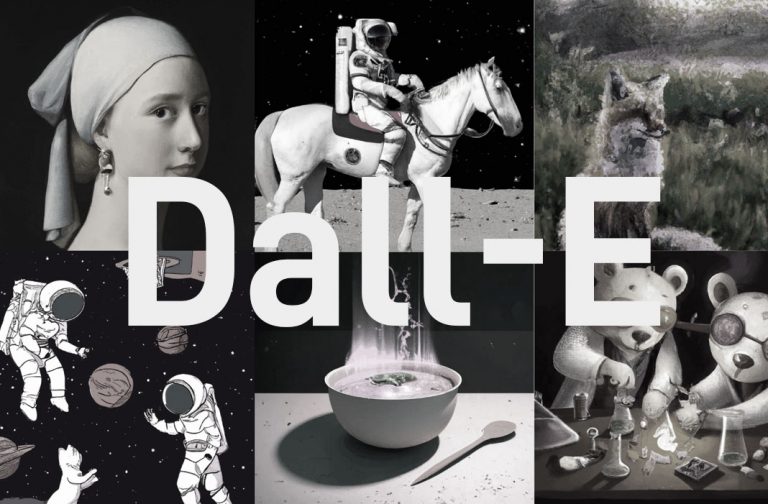
What is DALL-E & How to use DALL-E?  DALLE is a 12-billion variable version of GPT-3 that was trained on a dataset of text-image pairings to produce pictures from text descriptions. It can create anthropomorphized representations of animals and objects, combine unrelated concepts in believable ways, generate text, and apply alterations to existing pictures, among other things. DALLE is a language model that transforms. It accepts both the text and the picture as a single flow of data comprising up to 1280 tokens and is trained to create all of the tokens sequentially using maximum likelihood. This training technique enables DALLE to produce a picture from the start. It recreates any rectangular part of an existing image extending to the lower right in a manner congruent with the text prompt. DALLE can generate realistic visuals for a wide range of phrases that investigate the composition structure of language. DALL-E tiny sprang to prominence on the internet as social media users began combining known pop culture images into weird, photorealistic memes. The system, which Open AI first revealed in January last year, employs a customized version of the research firm’s spoken language generation model, GPT-3, to read plain text instructions. It then uses machine learning to ‘understand’ the logical relationship between the phrases and interpret it visually. The tool is part of a growing crop of AI graphic generators that can generate high-resolution, aesthetically realistic graphics without human cognitive intervention.  

How does it work?

Dall-E encodes this command to comprehend the words independently — and then discover a logical relationship between them — after you add a piece of text (which must have some connection, even if it is a weird one). Tools like Dall-E aim to have robots establish abstract linkages between words and interpret visuals based on subjective comprehension of issues rather than an objective, training-based understanding.  

Uses of Dall-E

Image generating techniques based on AI have a broad range of applications. According to Open AI, the technology has already been used by people with impairments to produce visual art. It provides artists with a tool to augment their capacity to create graphics and use it as a template to work on. Controlling many objects, their properties, and their spatial connections simultaneously poses a new difficulty. While DALL-E provides some control over the properties and placements of a limited range of objects, the success rate depends on how the description is stated. DALLE is prone to confuse the connections between the items and their colours when other things are presented, and the success rate drops significantly. DALL-E also allows you to adjust the perspective of a scene as well as the 3D manner in which it is displayed. The problem of translating words to visuals is vague: a single caption often correlates to an infinite number of probable images. Therefore the image cannot be chosen individually. DALL-E allows access to a portion of a 3D generating engine’s capabilities using natural language, with variable degrees of dependability. It can manage the properties of a small collection of objects individually and to a limited degree, how many there are and how they are organized in relation to one another. It may also regulate the position and aspect from which a picture is displayed and generate recognized items according to exact angle and lighting parameters.  

Alternatives to Dall-E

  1. Glid-3

GLID-3 combines Open AI’s GLIDE, the Latent Diffusion method, and Open AI’s CLIP. The code is based on photographic-style pictures of individuals and is a modified form of directed diffusion. It is a more compact mode. Compared to DALL.E, GLID-3 output is less likely to generate inventive graphics in response to supplied cues.  
  1. Craiyon

Craiyon, known initially as DALLE mini, is an AI system capable of drawing graphics from any word input!  
  1. DALL-E Flow in Google Colab

A technique with a human in the loop for making high-quality photos from text  
  1. Minds Eye Beta

Pilot AI art project completed in Google Collab and LocalTunnel  
  1. Dall-E 2

DALL-E 2 is a new AI system which can generate realistic visuals and art from natural language descriptions.  
  1. Neuro Gen

NeuroGen is a program that allows you to rapidly and simply make AI art. You make pictures by expressing what you want to see in words. NeuroGen is a program that allows you to rapidly and simply make AI art. To use NeuroGen, you input words describing what you want to see, and NeuroGen creates a set of pictures that correspond to that cue.  
  1. ruDALL-E

ruDALL-E takes a brief description and creates graphics from it. The model comprehends a wide variety of concepts and creates whole new pictures and things that did not previously emerge in the real world.  
  1. Neural Blender

NeuralBlender generates graphics from text input using cutting-edge AI technology.  
  1. AI Art Maker

AI Art Maker uses cutting-edge technology to generate art and graphics based on basic language instructions.  
  1. Dream by Wombo

Use the ability of artificial intelligence to create stunning artwork! Enter a prompt, select an art style, and watch Dream by WOMBO transform your concept into an AI-powered artwork in seconds.

Top 5 Ways Robotics Is Transforming the Food Industry

Top 5 Ways Robotics Is Transforming the Food Industry The food sector comprises multiple complicated procedures that robots are increasingly assisting in optimizing. Food robots have specific programming to assist with food cultivation and production jobs from the agricultural stages through restaurants, cooking at home, and grocery shops. Robots make each stage more prepared to satisfy supply and demand with increased productivity and safety. Robotics has an impact on every step of the food supply chain. Here are five ways it is impacting the industry. The food business is transforming. Food consumption is increasing as the world’s population approaches 7.5 billion. Food providers are under pressure to boost their efficiency. Not only that, but customers demand higher-quality, more sustainable food at their fingertips. Automation and robotics are essential elements of the solution. The food business has been somewhat reluctant to embrace robotics compared to other industries. However, in recent years, robots have begun to penetrate practically every component in the food supply chain, from the farm to the kitchen. Food robots have specific programming to help food development and production, from agricultural to restaurants, home cooking, and grocery shops. Robots allow you to match supply and demand at every stage by increasing productivity and safety.  
  1. Agriculture
Agriculture is the foundation of the food business. Agriculture produces meat, vegetables, and dairy products. With the task of producing these food goods, agricultural businesses should rely on robots to handle each stage appropriately. Two of the most frequent robotic applications in agriculture are harvesting and plucking because of the precision and speed that robots can accomplish to increase yield and minimize waste from crops left in the field. These applications, however, might be challenging to automate. Farmers are increasingly using harvesting and picking robots, but there are hundreds of other inventive ways the agricultural business utilizes robotic automation to increase output yields. The goal of agricultural robotics is to assist the industry in enhancing its efficiency and profitability of operations and boost production, specialization, and environmental sustainability. Some causes that have spurred automation in this area include labour shortages, growing customer demand, and high manufacturing costs. Autonomous robots may wander around farming fields, removing weeds and monitoring crop health. Other self-driving robots can collect eggs and milk and feed the animals. These robots handle monotonous chores, allowing farmworkers to focus on activities requiring more skill or insight. Robotic applications include seedling, planting, identification, and sorting. There are also self-driving tractors and weeding and harvesting robots. Drones and self-driving cars are being utilized to monitor and evaluate crops. One new Harvard research study tries to address a critical issue for world agriculture: the reduction of bee populations. To pollinate crops, the researchers propose using a swarm of tiny drones. Robotics is also used in the dairy, poultry, and cattle agricultural industries for non-plant agriculture. Applications include self-feeding and milking, egg gathering and sorting, and self-cleaning.  
  1. Manufacturing
Manufacturing is the initial stage in the application of robots in food processing. This procedure includes multiple phases that are commonly performed at a manufacturing plant, such as packing and safety monitoring. To begin, robots can cleanse and categorize various sorts of food. Fruits and vegetables, for example, maybe simply separated into different containers by robotic arms. In manufacturing, robots are used to do repeated jobs, simplifying the whole assembly procedure. Robots and humans work together to create products. Many tasks are hazardous or involve large quantities of materials that might be hazardous to human employees. Robots can also prepare certain meals before packing. Because cutting fruits and vegetables involves various equipment, robots can operate more effectively by matching blades to the kind of cut necessary or switching between cutting devices rapidly. They may then chop items for grocery shops or even create meals independently.

Food manufacturing may be divided into two categories:

Cleaning, sorting, delivering, and combining raw food components are all examples of primary processing. Robotic butchery and fruit and vegetable sorting are two such examples of robotic applications. Secondary processing combines ingredients to create new food items by frying, baking, chilling, and other methods. Product sorting, defect elimination, and mixing are examples of robotic uses. Robotics applications are more adapted to secondary processing since the food is more standardized at that point. However, we see an increase in the number of primary processing robots.  
  1. Packaging
Food packaging robots have long been used in many sections of the food supply chain. The most recent advancement, however, is that the whole packing process may be automated. Robots in food processing can then mix the elements of a prepared meal, such as frozen dinners, once robots have manufactured the food. Workers can fulfil supply and demand with rapid and effective robotic packaging devices. These robots can also arrange the food onto pallets for subsequent storage and shipping. Autonomous robots will eventually be commonplace, roaming warehouses and efficiently collecting or storing merchandise. Packaging robots have several advantages in a variety of industrial applications. Packaging robots provide the speed, precision, and efficiency that robotic automation has been known for a while, offering a reasonably quick return on investment (ROI) when used appropriately. Packaging robots are often intended to open, fill, carry, palletize, seal, code, and tag product packaging. A packaging robot can automate almost any process that requires moving or packing items. These robots are utilized in a variety of applications.

Food packaging is divided into three stages:

Individual foods are packed in primary packaging. A pick-and-place robot, for example, places chocolates into plastic containers. Individual products are tied together in secondary packaging. Another pick-and-place robot, for example, piles the plastic tubs into a more extensive package. Secondary packages are bundled for delivery in tertiary packaging. A palletizing robot, for example, loads multiple boxes onto a pallet. Robotic packaging appears to have emerged as one of the most critical uses in the food business.  
  1. Food Delivery
Robotic meal delivery has recently gained a lot of attention. Following its first successful (and boisterous) delivery by drone at the end of last year, Domino’s Pizza revealed earlier this year that it would launch autonomous ground vehicles to deliver pizzas. Though some firms are still focusing on logistics, this acceptance would significantly impact food delivery. The little service robot is outfitted with cameras that provide it with a 360-degree vision. To make its delivery, the robot also can surmount a range of barriers. It can scale curbs by lowering its wheels one at a time until it reaches the sidewalk. It can also prevent human collisions and manoeuvre past obstructions. The robot is intended to make short-distance deliveries of modest orders, which are undesirable occupations for human delivery employees. Businesses are investing in delivery bots since city dwellers demand practically everything to be delivered immediately or on a schedule. Companies are also seeing the bottleneck produced by automobiles competing for space on congested urban roadways. Robots might potentially save businesses a lot of money in the long run. Although self-driving food delivery may seem to be the next craze, it addresses a growing market demand. Lately, there has been considerable interest in restaurant-quality food and home-delivered, ready-to-eat cuisine. Whether or not self-driving cars will become commonplace is uncertain, but our appetite for takeout is undoubtedly transforming the food sector. Following the closure of eateries due to the epidemic, meal delivery became the new standard. As a result, the top meal delivery providers earned $5.5 billion from April to September 2020 alone. This figure is more than double what they received during the same period in 2019. however, the meal delivery sector is continually expanding. Across the country, autonomous cars are already in use. Some function on a city-wide basis, while others thrive on college campuses. Kiwi, for example, autonomously distributes food throughout California college campuses. The business aspires to break the global record of 500 deliveries in one day.  
  1. Cooking
Cooking robots are also essential in the food business. Restaurants are already utilizing robots to prepare and cook their food. Creator, a burger establishment in San Francisco, uses robots to ground the meat, cook the patties, and supply the toppings, creating the complete burger. These robots may soon become a fad in home cooking as well. Moley Robotics has previously produced a robot that can assist consumers in cooking food at home. The startup intends to sell robots with 5,000 built-in meals and talents in the future. Making automation, on the other hand, does not always imply cooking meals on command. The APRIL robot, for instance, aims to improve the quality of ready-made meals. Traditional mass manufacturing methods degrade food quality owing to huge batch sizes. The inventors say that the food quality improves by cooking in smaller quantities with a KUKA robot. Cooking and delivery robots, on the other hand, are still in their infancy compared to other phases of the food supply chain. However, there is no denying that automation is transforming the food business.

Best CRM Software for Small Businesses in India

Best CRM software for small businesses in India Small firms rely only on growth to ensure their survival. You’ll be crushed and thrown out if you don’t evolve and advance in today’s competitive business climate. This is especially necessary for smaller firms, which rely on publicity and client relationships to develop. Clients are the heart of every business; regardless of how big or little, your firm would fail without them. On the other hand, the success and expansion of a firm depend on the interaction you have developed with your clients. This is when CRM software comes in handy. It involves everything you need to manage your client relationships. There are various free CRM software options available that provide excellent alternatives for small to medium-sized businesses. These free CRM software programs are intended to assist organizations in managing connections, managing leads, identifying chances for transforming leads to sales, and more. Here are the best five free CRM applications for small enterprises.  

What is CRM Software?

CRM software is an all-in-one solution for managing customer information, adding comments, sending emails, managing customer experiences/satisfaction, and much more. You may perform all of this without exiting the CRM software system. CRM software is a platform that links and organizes the actions and KPIs of your many teams, from marketing to sales to customer support. It gives a complete view of all client contacts, maintains track of your sales, assists in organizing and prioritizing your opportunities, and promotes communication among multiple departments. CRM for small companies keeps everyone in your organization on the same page by providing marketing, sales, and customer service with all of the data they need to thrive in their positions. A cloud-based CRM enables your staff to access customer information almost anywhere, in real-time, enhancing productivity. Manual procedures become progressively inefficient and costly as your company expands. If you are not cautious, you might quickly lose consumers and sales.

Top CRM Software for small businesses in India

  • Drip

Drip is the most accepted eCommerce CRM, but it’s also an excellent CRM for small businesses. It’s powerful, has a lovely UI, and is simple to use for any business. This CRM simplifies the creation of automated processes and email campaigns. You may use a visual designer or a text builder to create your email. And both options are pretty simple. Drip provides simple list segmentation, conversion monitoring, content modification, buy intent marketing, and other features. You can discover and monitor all you need to know about your clients’ stories using tags, events, and custom fields. As a result, it’s an exceptional client database program that may help you handle your contacts profitably. It’s intended to boost your bottom line by assisting you in generating leads, managing contacts, and converting them into lasting clients. Drip includes marketing automation, extensive contact management, actionable reporting, email campaigns, one-on-one interactions, eCommerce user tracking, and other capabilities.  
  • Sendinblue

Sendinblue is a robust email marketing solution with all elements required to function as a complete CRM. Sendinblue is an excellent choice for any sized business since it allows you to begin for free and then improve as your company expands. They provide dependable email delivery, email marketing, automation, transactional email for eCommerce, intelligent segmentation, and other services. They also include SMS marketing and chat, unlike many other CRMs. SMS marketing is a powerful strategy that may immediately increase sales and engagement. Their live chat service lets you communicate with consumers and leads in real-time.  
  • Hubspot

HubSpot is undoubtedly the finest CRM for smaller firms seeking a low-cost CRM solution since they first start. It’s an excellent client database program for handling new leads. HubSpot is a simple CRM that provides a wide range of customer journey management capabilities. It also has free options with restricted functionality for its CRM, Marketing, Sales, and Service Hubs that are available indefinitely. The CRM offers a user-friendly layout that allows you to see your entire sales funnel directly on your dashboard. You can examine all Contact and sales activity, detailed reports, and the user or team performance if you want more information. HubSpot provides an iPhone and Android app, email templates, real-time alerts, email monitoring, scheduling, phone calls, and other features. It also connects with over 300 applications and services, including WordPress, email marketing platforms, lead-generating tools such as OptinMonster, and many more. You can also link HubSpot to Gmail or Outlook to automatically log activity, collecting every email.  
  • Constant Contact

Constant Contact is a conventional email marketing solution that may also be used as a CRM. With a basic and easy dashboard, marketing automation, analytics, sales funnels, and a helpful drag and drop tool for composing emails, it’s ideal for small firms. You may also use Constant Contact’s massive marketplace to store contacts, manage client information, and integrate 3rd-party connectors (including eCommerce integrations). The variety of connectors makes it simple to create the ideal platform for your company.  
  • Salesflare

Another popular CRM to consider is Salesflare, and their motto says it all: less effort, more sales. This is due to the fact that Salesflare is a CRM that enables communication with customers, in addition to all of your favourite marketing tools. Even if you have limited data, to begin with, you can begin with only a few clicks and produce more sales. This program collects contact information for your leads from social accounts, email signatures, as well as other public sources. Furthermore, all of your appointments and phone conversations are automatically tracked, so you don’t have to worry about missing to enter tiresome data.  
  • Zoho CRM

Zoho is a cloud-based software package that provides you with everything you need to manage your small business efficiently. You’ll gain a formidable collection of marketing and sales capabilities with SaaS apps and online business applications. This simple CRM software assists small businesses in organizing contacts, marketing their brand, managing sales, providing customer assistance, and much more. You may use Zoho CRM to interact with other marketing tools, acquire leads via social media, segment users, and provide help via built-in live chat.  
  • Pipedrive

Pipedrive is an incredibly easy-to-use CRM software that is meant to be simple and quick. With their pipeline management feature, you can obtain an overview of your whole sales process and maintain control throughout. You’ll receive email connectivity, sales reporting and forecasting, and mobile applications to access your CRM from anywhere and pipeline management with a simple, visual interface. Pipedrive does not provide segmentation, but identifying leads and maintaining connections is simple enough.  
  • Salesforce

Salesforce is a titan in the CRM sector, one of the most delicate CRM for smaller companies. You can use Salesforce to take prospects through a tailored customer experience and leverage the intelligent marketing platform to generate more sales via emails, SMS messaging, social networks, and digital advertising. CRM is a free CRM solution that is the ideal company solution. Salesforce has been operating for quite a long time, so it contains a ton of complex features and services for anything you could potentially need: sales, marketing, eCommerce, customer support and engagement, team effectiveness, and so on.  
  • Freshsales

Freshsales, currently known as Freshworks, is a prominent CRM software that is suitable for businesses of all sizes. It is simple and provides a sales-oriented strategy with all the capabilities required to optimize conversions. It offers a great dashboard that provides instant access to contact management, statistics, emails, phone calls, and other features. If the simple, web-based interface wasn’t enough, there are now mobile applications that allow you to sell wherever you are. Freshsales uses artificial intelligence-powered lead scoring to help you effortlessly prioritize the leads more inclined to be receptive. You can also utilize the 360-degree view of the customer to see all of the essential information on a single page, as well as build up custom process automation, gain actionable insights from conversations, track events, and see all of the essential information from a single screen.  
  • Streak CRM for Gmail

Streak CRM integrates with G Suite, and free Gmail accounts to track client emails and leads, handle contacts, and keep track of your sales funnels. If you currently use Gmail or G Suite, this CRM software might be ideal for you. You may harvest leads automatically through your contacts, add tasks and reminders, plan emails, create customized pipelines/funnels, add tags and notes, and much more. Streak CRM includes workflow management tools such as hiring, program management, sales, assistance, and more, and you can also configure it to meet your specific requirements. It’s straightforward to use, even for total newbies, because it’s incorporated into Gmail. This CRM software is available as a browser extension, a mobile app for iOS, and an android application.   You must have a specific plan, plan, and execution to retain customer connections in your business. It will be tough to maintain track of all the touch points and conversations you’ve had with your customers and leads via the execution of your digital marketing plan if you don’t have a suitable customer relationship management approach. As a business owner, the ultimate thing you want is to provide a bad client experience, which leads to revenue and reputation loss. This is why the most excellent free CRM software is essential.  

Top 10 EV (Electric Vehicle) manufacturers in India

Under the banner of the Government of India’s National Electric Mobility Mission Plan, the automobile industry and Indian car manufacturers are working on the Make In India mission of electric cars. Within the next two decades, India’s electric vehicle sector will generate a greater number of electric motorcycles, electric vehicles, and electric three-wheelers. With the government’s goal of being entirely electric by 2030, various brands have emerged in India’s electric car industry. Their goal is to make EVs more inexpensive, dependable, and ideal replacements for ICE. The auto industry is on the verge of a shift: from internal combustion engine (ICE) vehicles to electric vehicles in an attempt to embrace greener transportation. Surprisingly, Indian corporations are driving the switch to EVs.

Have a look at the top 10 EV (Electric Vehicle) manufacturers in India

 
  1. TATA Motors
Tata Motors is India’s largest automaker. Its automobile business includes the production of automobiles, commercial vehicles, buses, trucks, and defence vehicles. Jaguar Land Rover and Tata Daewoo are among its affiliate firms. However, as compared to Mahindra, Tata is a new entry in the EV industry. Tata Motors was one of the earliest Indian automakers to jump on the electric car bandwagon. It was the first to examine the EV space, much ahead of the competition, and now has a modest first-mover advantage. Tigor EV was the manufacturer’s first electric car for private consumers, and it cost a lot of money in 2019. In February 2022, this vehicle accounted for 95% of total electric vehicle sales.  
  1. Mahindra 
Mahindra Reva, its first EV, was launched in 2001. The Mahindra Reva was the country’s first electric vehicle. Mahindra has established a specialized R&D centre in Bengaluru throughout the years. Mahindra Electric, which has been a key participant in the automotive business for several decades, has achieved rapid growth by swiftly recognizing the demand for electric vehicles and acting appropriately. Its history can be traced back to 2001, with the introduction of the Mahindra Reva, which was one of the world’s first electric vehicles, selling in foreign markets such as the United Kingdom, Germany, and France. The Mahindra E20 and eVerito are two of its other EV models. Mahindra, on the other hand, has focused not just on the production of EVs but also on the production of battery packs and has cooperated with several organizations to promote EV charging.  
  1. Hyundai
Hyundai launched its electric car marketing in India in 2019 with the launch of the Kona SUV. Despite the fact that the industry was in its early stages at the time, it was among the first international brands to develop an electric vehicle for the Indian market. After carefully analyzing the Indian EV market and considering numerous factors, the South Korean automaker is expected to debut six new electric vehicles at various pricing ranges by 2028. It intends to do so in collaboration with its sister brand, Kia Motors, by pooling resources and targeting diverse types of market customers.  
  1. Hero Electric
Hero Electric is now the market leader in the electric two-wheeler industry. Consumers have developed a sense of faith and trust in the brand because it has been a well-established brand in the business for over 14 years. Having said that, Hero Electric is able to sell thousands of electric two-wheelers each month, setting a new record. It intends to produce over one million EVs by 2025, while also expanding its factory and charging facilities. The firm now has 2000 charging stations around the country, with 20,000 more on the way, making it much simpler for its clients to swiftly charge their two-wheelers at different spots. Hero Electric’s e-scooter portfolio includes the Optima HX, Photon HX, NYX HX, Flash LX, and Atria LX. Its sales figures indicate that the corporation has sold more than 46,260 electric scooters in the year 2021.  
  1. Olectra Greentech
Olectra Greentech is India’s leading maker of electric buses. It has received multiple orders for public transportation buses from state governments. Olectra now has a 40% market share in the electric bus sector and wants to manufacture electric three-wheelers and commercial vehicles at its 150-acre production site in Hyderabad. Olectra Greentech, founded in 1992, is a firm that cannot be overlooked since it has been a leader in the field of electric public buses. The firm is now India’s largest maker of electric buses. The firm is a member of the MEIL group. The firm offers several models, including the K6, K7, and K9 E buses. When it comes to E buses, their K9 series is regarded as groundbreaking.  
  1. Ashok Leyland
Ashok Leyland, a commercial vehicle manufacturer, has also joined the EV market, producing passenger electric buses. However, it has recently shifted its EV business to its step-down company, Switch Mobility Automotive Ltd (SMAL), in order to concentrate on its main business of commercial trucks and buses. Ashok Leyland remains a substantial stakeholder in the newly established subsidiary and will be in charge of the company’s strategic choices. Ashok Leyland creates electric variations tailored for Indian circumstances and has also used battery switching in electric buses to satisfy the country’s e-mobility demands. It has introduced many electric bus models, including the Circuit, HYBUS, Electric Euro 6 Truck, and the iBUS. However, the company’s immediate focus is primarily on increasing exports. Several passenger buses in its fleet, including the Circuit, Solo, Metrocity, and Metrodecker, are provided to other cities such as London.  
  1. Ola Electric
Through its Ola S1 and Ola S1 Pro electric scooters, Ola Electric Mobility, a branch of Ola Cabs, has taken the market by storm. The firm manufactures electric two-wheelers in its 500-acre automated plant in Tamil Nadu’s Krishnagiri area. Ola now produces 1000 electric scooters and pledges to be the world’s largest two-wheeler brand in the next years, with a yearly output of 10 million units. The S1 and S1 Pro e-scooters have dominated the market thanks to high-end features like keyless ignition, a huge cargo area, an external charging connector, and a plethora of smart capabilities available via the large LED display. Both of these scooters have amazing performance capabilities.  
  1. Ather Energy
Ather Energy created India’s first smart electric scooter, the S340. Launched in 2016, the scooter included never-before-seen capabilities on a two-wheeler such as a capacitive touch screen, user-based profiles, and even an app to control the e-numerous scooter’s settings. As an active participant in the EV industry, Ather has built its charging infrastructure, known as Ather Grid, throughout 21+ cities and 220 sites in India. It presently produces two electric scooters, the Ather 450X and Ather 450 Plus, both of which have features such as reverse assist, a high-end suspension system, and a slew of advanced features such as Bluetooth connectivity and monthly riding metrics. Ather created electric scooters that raised the benchmark high and inspired other EV manufacturers to innovate and push the edge. Its flagship electric scooter, the 450X, is one of the most feature-rich in the country, with a genuine riding range of roughly 85 kilometers on a single charge.  
  1. Okinawa
Okinawa is a popular brand of electric two-wheelers among teenagers. The Gurugram-based firm, which was launched in 2015, creates sporty-looking e-scooters that are frequently linked with speed and performance. Okinawa was ranked second among India’s best two-wheeler brands as of February 2022. It has been able to acquire a significant portion of the market share by offering two-wheelers in a variety of pricing ranges, giving it a competitive advantage. It produces its cars in a factory in Bhiwadi, Rajasthan, which is responsible for the production and delivery of six electric two-wheelers in its portfolio, including the Okinawa R30, Ridge Plus, Praise, i-Praise, and OKHI-90, which will compete directly with the feature-packed Ola S1 Pro.  
  1. Ampere Vehicles
As of February 2022, Ampere Vehicles is the third largest two-wheeler EV brand in the country. Founded in 2008, the firm began by offering automobiles for the differently-abled under government contracts. After years of development, it released the V60 electric scooter in 2010 and then produced an indigenous charger and an IQ battery. It has supported various investments from individuals such as Shri Ratan N Tata throughout the years. It presently has four electric scooters in its fleet: Magnus EX, Magnus, Zeal EX, and Reo Plus, which range in price from Rs 45,000 to Rs 80,000. In terms of sales, the firm sold a total of 4303 units in February 2022.   This article will address India’s top electric car inventories as well as a list of top Electric Vehicle Manufacturers in India, as well as their present performance in the electric vehicle industry and future prospects. The Indian government has set the objective of substituting all internal combustion engines with electric cars as its own. The government has established crucial goals to support the development of electric cars, but more work is needed to meet these targets. Above all, the contributions of these prominent Electric Vehicle Manufacturers in India will be critical to attaining electric mobility in India.